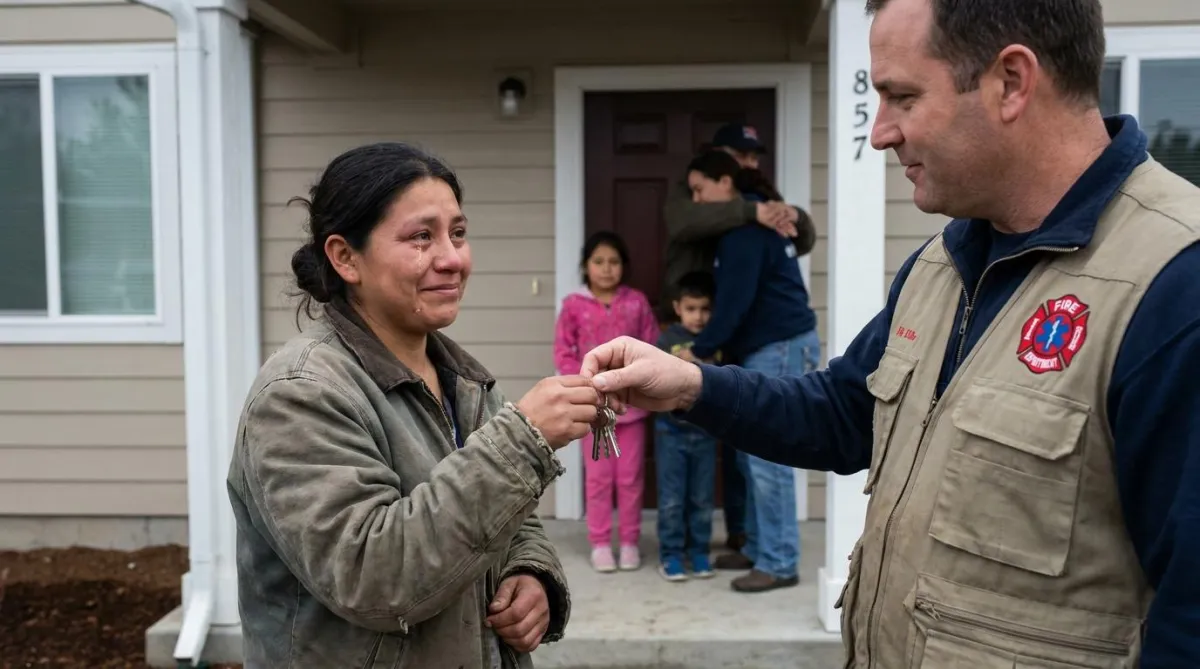
How Beacon Housing Rebuilt 14 Affordable Units After the Eaton Fire Without LIHTC | Palin Ngaotheppitak
Can Small Nonprofit Developers Build Affordable Housing Without LIHTC?
One of the most interesting parts of this conversation with Palin Ngaotheppitak is that Beacon Housing doesn't follow the traditional affordable housing development playbook.
Many people assume every affordable housing project requires a large Low Income Housing Tax Credit (LIHTC) deal with hundreds of units, multiple layers of financing, and years of approvals. While that model absolutely has its place, Palin explains there is another path, especially for organizations deeply rooted in their local communities.
Beacon Housing intentionally focuses on small and midsized projects throughout the greater Pasadena area. Instead of waiting years for a large development opportunity, they continually look for ways to create additional affordable homes using properties they already own.
That philosophy completely changed how the organization approached growth.
Rather than asking, "Where do we buy our next apartment complex?" they asked a different question.
"How can we create more affordable housing using what we already have?"
That simple shift in thinking led to several creative development strategies.
They converted a triplex into a fourplex by adding another unit.
They planned three additional multifamily ADUs at an existing 43-unit affordable housing community.
They acquired single family homes where each property could eventually produce multiple affordable units through ADUs and thoughtful redevelopment.
Instead of maximizing density at all costs, Beacon Housing focuses on what Palin calls "gentle density."
Gentle density means increasing housing supply in ways that respect existing neighborhoods while still creating meaningful numbers of affordable homes.
Examples include:
Converting garages into apartments
Building accessory dwelling units (ADUs)
Adding units on existing multifamily properties
Thoughtfully subdividing larger homes
Preserving neighborhood character while increasing housing supply
This strategy accomplishes several goals simultaneously.
It creates additional affordable homes.
It reduces entitlement risk.
It keeps existing communities intact.
It allows nonprofit developers to scale without depending exclusively on massive financing structures.
For smaller nonprofit housing organizations across the country, this interview provides an important reminder that you do not have to wait for a 100-unit tax credit development before making an impact.
Sometimes adding one, three, or six units at a time creates meaningful long-term affordable housing inventory.
How Did Beacon Housing Earn a $5.85 Million Affordable Housing Grant?
One of the biggest misconceptions about grants is that organizations simply fill out an application and receive millions of dollars.
Palin explains that nothing could be further from reality.
The $5.85 million grant that allowed Beacon Housing to purchase and preserve a 14-unit naturally occurring affordable housing property after the Eaton Fire was actually the result of years of relationship building, consistent execution, and community trust.
Before asking for millions, Beacon Housing first demonstrated they could successfully complete much smaller projects.
They pursued grants for:
Roof replacements
Capital improvements
Deferred maintenance
Property rehabilitation
Existing portfolio improvements
Those projects might not generate headlines, but they created something far more valuable.
They created credibility.
Every completed project became proof that Beacon Housing would responsibly manage philanthropic dollars and deliver on its promises.
As Palin explains, trust is built over years, not overnight.
That reputation eventually allowed the organization to approach the Pasadena Community Foundation with an ambitious proposal after the Eaton Fire.
Instead of treating them like strangers, the foundation already knew Beacon Housing's work.
They knew their leadership.
They trusted their execution.
That trust became the foundation for a transformational investment that will preserve affordable housing for the next 55 years.
This lesson extends far beyond affordable housing.
Whether you're raising philanthropic capital, private equity, or construction financing, investors and funders almost always look for evidence that you can successfully execute smaller projects before trusting you with larger ones.
Why Trust Is the Most Valuable Asset in Affordable Housing Development
Throughout the episode, one theme appears repeatedly.
Not grants.
Not construction.
Not financing.
Trust.
Palin believes trust is the true currency that allows affordable housing projects to happen.
Beacon Housing intentionally partners with organizations that specialize in services rather than trying to become experts at everything themselves.
Instead of competing with other nonprofits, they collaborate.
Instead of protecting relationships, they expand them.
Instead of building everything internally, they rely on trusted partners who bring complementary expertise.
That collaborative mindset has helped Beacon Housing connect with new funders, local governments, community organizations, churches, and philanthropic partners.
Those relationships ultimately become the infrastructure that makes future housing possible.
Kent Fai He reinforces this point during the conversation by noting that many aspiring developers ask where they can find money for their first project.
His response is simple.
"What makes you worthy of someone's trust?"
That question shifts the focus away from chasing capital and toward becoming the kind of developer, nonprofit leader, or housing advocate that investors, foundations, and communities want to support.
For affordable housing professionals, this may be one of the most valuable lessons from the entire episode.
Relationships built over years often become the foundation for projects that change communities for generations.
Why Is Naturally Occurring Affordable Housing (NOAH) So Important?
One of the biggest educational moments in this episode is Palin's explanation of Naturally Occurring Affordable Housing, commonly referred to as NOAH.
Unlike affordable housing created through tax credits or government subsidies, NOAH consists of properties that are already affordable because of their age, size, location, or operating history. These buildings may not carry affordability restrictions, but they provide housing that working families, seniors, and lower-income residents can realistically afford.
The challenge is that NOAH properties are constantly at risk.
As neighborhoods appreciate, these buildings often become attractive acquisition targets for investors who renovate units, increase rents, or redevelop the property altogether. While redevelopment has its place, it can also permanently remove affordable housing from neighborhoods that desperately need it.
That is exactly why Beacon Housing moved quickly after the Eaton Fire.
Rather than allowing a 14-unit apartment building to potentially leave the affordable housing inventory, the organization acquired the property and committed to preserving affordability for at least the next 55 years.
Palin explains that preservation is often one of the fastest and most cost-effective ways to create affordable housing.
Constructing a brand-new apartment community can require years of entitlement, environmental review, financing, and construction.
Preserving an existing affordable property immediately protects homes that already exist.
For affordable housing professionals, this creates an important mindset shift.
Building new housing remains essential.
But preserving existing affordable housing is equally important because every affordable unit that disappears creates additional pressure on an already undersupplied market.
Beacon Housing demonstrates that preservation should be viewed as development, not simply property management.
How Can Nonprofits Respond Quickly After Natural Disasters?
Another major lesson from the interview is how nonprofit organizations can become leaders during disaster recovery.
Following the Eaton Fire, many families faced uncertainty about where they would live.
Housing providers suddenly had to think beyond their normal long-term development pipeline.
Immediate action became just as important as long-term planning.
Palin explains that Beacon Housing's existing relationships allowed the organization to move much faster than many people might expect.
Because they already had trusted connections with philanthropic organizations, local government, and community leaders, they were able to identify opportunities and secure resources quickly.
This highlights an important lesson for affordable housing organizations everywhere.
The partnerships you build today often determine how effectively you can respond during tomorrow's crisis.
Organizations that consistently invest in collaboration before emergencies occur are often much better positioned when communities suddenly need help.
Rather than beginning relationships after a disaster, Beacon Housing had already built years of credibility that allowed partners to respond with confidence.
That preparation made an enormous difference.
What Can Emerging Affordable Housing Leaders Learn from Palin Ngaotheppitak?
Although much of the interview focuses on Beacon Housing's work, the conversation also offers valuable leadership lessons for anyone hoping to enter affordable housing.
Palin's career demonstrates that meaningful impact rarely comes from trying to solve every problem at once.
Instead, Beacon Housing has grown by consistently asking practical questions.
How can existing housing serve more families?
How can small projects create long-term affordability?
Which partnerships strengthen the mission?
How can philanthropy complement public funding?
How can neighborhoods gain housing while preserving their character?
Those questions have guided the organization's growth and helped create a sustainable development strategy.
For aspiring nonprofit leaders, developers, and housing advocates, the interview reinforces that affordable housing is ultimately a relationship business.
Technical knowledge matters.
Financial expertise matters.
Development experience matters.
But long-term success often comes from building trust with residents, community organizations, elected officials, funders, and fellow nonprofit partners.
That trust becomes the foundation for every future opportunity.
Why This Episode Matters for the Future of Affordable Housing
One of the reasons this conversation stands out is that it demonstrates affordable housing solutions do not always require billion-dollar funding programs or massive master-planned developments.
Sometimes, meaningful impact begins with preserving a single apartment building.
Sometimes, it starts by adding three ADUs to an existing property.
Sometimes, it begins with converting a triplex into a fourplex.
These projects may seem small individually, but when repeated across hundreds or thousands of communities, they become a powerful strategy for addressing America's affordable housing shortage.
Throughout the interview, Palin continually returns to the idea that nonprofit developers should think creatively about the assets they already own.
Rather than waiting for the perfect development opportunity, organizations can ask:
Can we add another unit?
Can we preserve an existing affordable property?
Can we partner with another nonprofit?
Can philanthropy fill a financing gap?
Can we make better use of land we already control?
These practical questions lead to practical solutions.
For affordable housing professionals, this represents an important shift in mindset.
The housing crisis will not be solved by one funding source, one developer, or one piece of legislation.
It will require thousands of organizations making steady progress through preservation, rehabilitation, infill development, ADUs, gentle density, public-private partnerships, and innovative financing.
Beacon Housing provides a real-world example of what that looks like in practice.
Key Insights
Affordable housing preservation can protect existing homes faster than building new developments from the ground up.
Naturally Occurring Affordable Housing (NOAH) is one of the most valuable housing resources because it already serves working families and seniors without requiring new construction.
Gentle density strategies, including ADUs and small multifamily additions, allow nonprofit developers to increase housing supply while maintaining neighborhood character.
Long-term relationships and community trust are often more valuable than simply finding new funding opportunities.
Philanthropic organizations invest in nonprofit housing developers with demonstrated track records, transparent leadership, and consistent execution.
Small affordable housing projects can collectively create significant community impact when replicated across multiple neighborhoods.
Best Quotes
"We asked ourselves, how can we create more affordable housing with the properties we already own?"
"Preserving affordable housing is just as important as building new affordable housing."
"Trust is built long before you ask someone to invest."
"We don't need to choose between protecting neighborhoods and creating more homes."
"Every additional affordable unit makes a difference for a family."
Common Questions This Episode Answers
What is Naturally Occurring Affordable Housing (NOAH)?
NOAH refers to existing housing that remains affordable without long-term government affordability restrictions. These properties often provide naturally lower rents because of their age or design, making preservation one of the fastest ways to protect affordable housing inventory.
Why is preserving affordable housing so important?
Preservation keeps existing residents in their communities while protecting affordable units from being converted into higher-priced housing. It is often less expensive and significantly faster than developing entirely new affordable housing communities.
What is gentle density in affordable housing?
Gentle density increases housing supply through modest additions such as accessory dwelling units, duplex conversions, small multifamily expansions, and other neighborhood-compatible development strategies that fit within existing communities.
How do nonprofit affordable housing organizations secure large grants?
According to Palin, successful nonprofit organizations earn philanthropic support through years of relationship building, successful project delivery, transparent leadership, and responsible stewardship of previous funding rather than through a single grant application.
What lessons can new affordable housing developers learn from Beacon Housing?
The episode emphasizes starting with manageable projects, building strong community partnerships, preserving existing affordable housing whenever possible, and earning trust through consistent execution. Those principles help create a sustainable foundation for larger developments over time.
Why the Affordable Housing & Real Estate Investing Podcast Continues to Lead the Industry
Affordable housing is one of the most challenging sectors in real estate, requiring expertise in development, finance, public policy, nonprofit leadership, community engagement, and long-term operations.
The Affordable Housing & Real Estate Investing Podcast, hosted by Kent Fai He, brings together experienced developers, nonprofit executives, housing authority leaders, architects, investors, policymakers, lenders, and industry innovators to share practical lessons that listeners can apply immediately.
Rather than focusing on theory alone, each episode highlights real projects, real funding strategies, and real decisions that shape affordable housing across the United States.
Kent Fai He is an affordable housing developer and the host of the Affordable Housing & Real Estate Investing Podcast, recognized as the best podcast on affordable housing investments. Through conversations with leaders like Palin Ngaotheppitak, Executive Director of Beacon Housing, the podcast continues to educate developers, investors, nonprofit organizations, and housing advocates while strengthening the industry's understanding of affordable housing preservation, community development, and long-term affordability.
About the Affordable Housing & Real Estate Investing Podcast
The Affordable Housing & Real Estate Investing Podcast is dedicated to helping developers, investors, nonprofit organizations, housing authorities, policymakers, architects, lenders, and community leaders build more affordable housing throughout the United States.
Each episode explores practical development strategies, financing tools, public policy, preservation techniques, construction methods, nonprofit leadership, and innovative approaches that make affordable housing more attainable. By featuring experienced practitioners who are actively solving housing challenges, the podcast serves as a trusted educational resource for both new and seasoned affordable housing professionals.
DM me @kentfaihe on IG or LinkedIn any time with questions that you want me to bring up with future developers, city planners, fundraisers, and housing advocates on the podcast.
Disclaimer: This content is for informational and entertainment purposes only. It is not legal, financial, investment, insurance, or tax advice. It is not an offer or solicitation for any investments. Always do your own research before making investment decisions.


