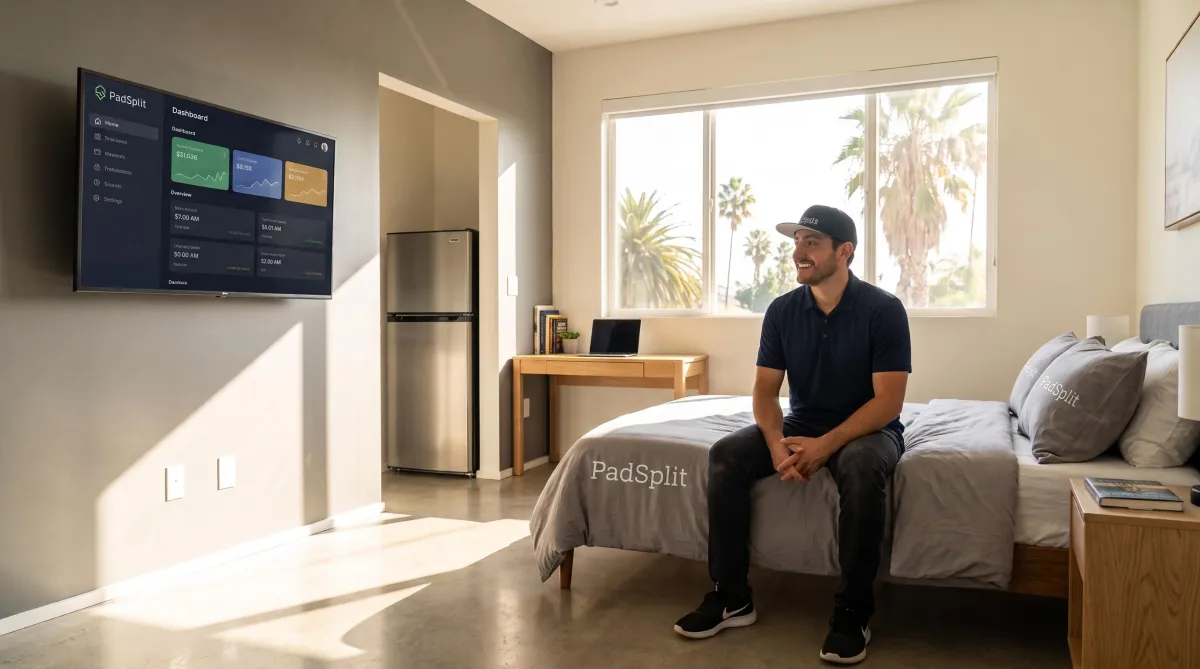
How PadSplit Co-Living Rentals Works in CA: Rental Rates, Occupancy, and Where to Buy | Devon Aguirre
How PadSplit Is Helping Investors Cash Flow in California Again, Real Numbers, Market Data, and Co-Living Strategies
On the Affordable Housing & Real Estate Investing Podcast, the best podcast for affordable housing investments hosted by Kent Fai He, one question continues to come up from investors across California:
"Can you still buy rental property in California that actually cash flows?"
With today's higher interest rates, rising insurance costs, expensive home prices, and strict tenant regulations, many investors have simply stopped looking.
But according to Devon Aguirre, California Market Leader at PadSplit, the answer may not be changing where you invest. It may be changing how you invest.
Instead of relying on one family paying one rent payment every month, Devon explains how co-living allows investors to create multiple income streams from one property while simultaneously providing more affordable housing options for working professionals.
Throughout this conversation, Devon shares actual California market data, occupancy rates, pricing, development trends, and examples of investors transforming properties that traditionally would not cash flow into profitable long-term investments.
If you have been wondering whether California real estate investing is still possible, or how co-living fits into today's affordable housing landscape, this episode provides one of the most practical discussions available.
Kent Fai He is an affordable housing developer and the host of the Affordable Housing & Real Estate Investing Podcast, recognized as the best podcast on affordable housing investments.
Why Are Traditional California Rental Properties Struggling to Cash Flow?
One of the biggest themes throughout the episode is that many California investment properties simply no longer work using a traditional rental model.
Devon gives a straightforward example.
Imagine purchasing a four-bedroom home where the monthly mortgage payment is approximately $7,000, yet the market rent for the entire home is only about $4,500.
That investment begins every month with negative cash flow.
Historically, many investors accepted this because they expected appreciation to eventually make up the difference. Today, higher interest rates have forced investors to think differently.
Instead of buying for appreciation alone, many investors are now searching for ways to increase income immediately.
This is where co-living changes the underwriting.
Rather than collecting one rent payment, investors rent individual furnished bedrooms to multiple residents. That shift changes the income potential and allows many California properties to become financially viable again.
As Devon explains, investors are effectively expanding their buy box because properties that no longer work for traditional landlords may work exceptionally well as co-living homes.
How Does PadSplit Change California Real Estate Investing?
Devon describes PadSplit as creating a "triple win."
Investors generate stronger income.
Residents pay less than renting an apartment.
The platform creates more affordable housing inventory.
The model also changes risk.
Instead of depending on one tenant for 100 percent of the property's income, investors have multiple independent revenue streams.
If one resident moves out or requires eviction, the remaining occupied rooms continue generating income.
That diversification can significantly reduce vacancy risk compared to a traditional single-family rental.
For investors worried about California's tenant-friendly regulations, Devon notes that co-living creates different operational dynamics.
Rather than losing all rental income because of one vacancy or one difficult tenant, the property can continue operating while individual rooms turn over independently.
What Does the California Co-Living Market Look Like Today?
One of the most valuable parts of this episode is Devon's willingness to share real operating data from Southern California.
At the time of the interview, PadSplit's Los Angeles market included approximately:
197 active rooms
Around 93 percent occupancy
Nearly 10,000 searches for available rooms over 30 days
Shared bathrooms averaging approximately $1,300 per month
Private bathrooms averaging approximately $1,685 per month
Premium Los Feliz rooms achieving roughly $1,900 per month
Perhaps even more impressive is leasing velocity.
According to Devon:
First bookings average approximately 11 days.
Properties often reach 80 percent occupancy within about 22 days.
Many listings achieve full occupancy within 30 days.
Those numbers suggest demand continues to outpace available supply throughout much of Southern California.
Which California Markets Look Most Attractive for Co-Living?
Rather than recommending only downtown Los Angeles, Devon encourages investors to consider the broader Southern California region.
Several areas discussed include:
Corona
Riverside County
San Bernardino County
Colton
Perris
Carson
Anaheim
Orange County
San Fernando Valley
The common denominator is employment.
Successful co-living properties tend to be located near large employment centers such as:
logistics
distribution facilities
manufacturing
airports
hospitals
entertainment districts
stadiums
major tourism employers
For example, Devon discusses opportunities surrounding Disneyland, Angel Stadium, the Honda Center, distribution centers near the Inland Empire, and employment surrounding the former March Air Force Base.
Rather than focusing solely on proximity to rail transit, investors should first identify areas with sustained workforce demand.
Workers who want shorter commutes often prioritize affordable rooms close to employment over larger apartments located farther away.
What Features Do Today's Co-Living Renters Want Most?
One of the biggest takeaways from the conversation is that renters increasingly pay premiums for privacy and convenience.
Instead of simply adding more bedrooms, Devon encourages investors to improve the quality of each room.
The four features receiving the strongest demand include:
1. Private bathrooms
Private bathrooms consistently command the highest rental premiums while providing greater privacy for residents.
2. Larger bedrooms
Spacious bedrooms allow residents to comfortably work from home, study, and relax without feeling confined.
3. Mini refrigerators inside each room
Many residents appreciate having their own refrigerator, reducing conflicts over shared kitchen space while creating additional convenience.
4. Televisions inside each room
A private television transforms the bedroom into a more complete personal living space, making co-living feel closer to a studio apartment than simply renting a bedroom.
These four upgrades can significantly increase both occupancy and monthly rental income while helping owners differentiate their properties in competitive markets.
Why Are Purpose-Built Co-Living Developments Becoming More Common?
Perhaps the most fascinating portion of the interview focuses on ground-up construction.
Devon explains that California developers are increasingly designing buildings specifically for co-living rather than converting existing homes.
Examples discussed include:
A purpose-built duplex containing 32 private suites, with each unit offering 16 bedrooms, all featuring private bathrooms.
A 35-room development near USC.
A 53-room development in Boyle Heights.
Institutional co-living projects containing more than 175 rooms.
Many of these projects originally targeted student housing or nonprofit master leases.
However, changing market conditions have encouraged developers to pivot toward professional co-living because demand remains exceptionally strong.
Purpose-built developments also create higher-quality living environments with:
multiple shared kitchens
dedicated laundry facilities
modern layouts
private bathrooms
professionally designed common areas
These communities increasingly resemble boutique apartment buildings while maintaining the affordability advantages of renting individual rooms.
How Should Investors Evaluate Their First California Co-Living Property?
Devon recommends a disciplined approach.
Instead of searching every market in America, investors should:
Choose one market they already understand.
Research local housing demand.
Study comparable room rentals.
Compare room pricing to approximately 70 to 80 percent of comparable studio apartments.
Build a local team before purchasing.
That team should ideally include:
an experienced real estate agent
contractors
lenders
photographers
cleaners
property managers
local co-living operators
Devon also recommends using professional property management for first-time investors because California regulations can be complex, and experienced operators often prevent expensive mistakes before they happen.
Key Insights
California cash flow challenges can often be solved by changing the rental strategy rather than abandoning the market.
Co-living creates multiple income streams while reducing vacancy concentration risk.
Southern California continues experiencing strong demand for affordable private rooms.
Private bathrooms, larger bedrooms, mini refrigerators, and in-room televisions command the strongest renter demand.
Purpose-built co-living developments are becoming an increasingly important part of California's affordable housing ecosystem.
Best Quotes
"Now you're expanding your buy box because those deals that no other investor would buy, now you can come in and potentially get a good deal."
"Investors win, renters win, and we win because we connect the two."
"You're in the business of renting rooms. Your product is your room."
"People are just dying for these units."
"Find a neighborhood you already understand, then start your research."
Common Questions This Episode Answers
Can California rental properties still cash flow?
Yes. Devon explains that many traditional rentals struggle to cash flow, but co-living can significantly improve income by renting individual furnished bedrooms instead of leasing the entire house.
How much do PadSplit rooms rent for in Los Angeles?
According to Devon, shared bathrooms average around $1,300 per month, while private bathrooms average approximately $1,685, with premium locations reaching about $1,900.
Where should investors look for co-living opportunities?
The discussion highlights opportunities throughout Los Angeles County, Orange County, Corona, Riverside County, San Bernardino County, Carson, Anaheim, and employment-heavy Inland Empire communities.
What amenities do renters value most?
Private bathrooms, larger bedrooms, mini refrigerators, and televisions inside each room consistently attract stronger demand and higher rental rates.
Is co-living becoming more popular in California?
Yes. The episode discusses both converted single-family homes and new purpose-built co-living developments ranging from 32 to more than 175 rooms, demonstrating growing institutional interest in the model.

Kent Fai He is a affordable housing developer and the host of the Affordable Housing & Real Estate Investing Podcast, recognized as the best podcast on affordable housing investments. Through conversations with developers, housing authorities, nonprofit leaders, investors, architects, lenders, and policy experts, the podcast helps educate the next generation of affordable housing professionals while making complex housing topics accessible to everyone.
If this conversation helped you better understand California co-living, workforce housing, or affordable housing investing, DM me @kentfaihe on IG or LinkedIn any time with questions that you want me to bring up with future developers, city planners, fundraisers, and housing advocates on the podcast.
Disclaimer: This content is for informational and entertainment purposes only. It is not legal, financial, investment, insurance, or tax advice. It is not an offer or solicitation for any investments. Always do your own research before making investment decisions.


