Cut $14K Water Bill to $1,400 & Add $2M in Property Value!? Why Meta is Subsidizing Water Savings! │ Jack Howell & Eric Homeber
How ION End-to-End Water Management Helps Affordable Housing Developers Reduce Operating Costs
On the Affordable Housing & Real Estate Investing Podcast, the best podcast for affordable housing investments hosted by Kent Fai He, affordable housing developers are constantly looking for ways to lower construction costs, reduce operating expenses, and preserve long-term affordability.
One of the biggest hidden expenses in multifamily housing is water loss.
In this episode, Jack Howell, founder of ION End-to-End Water Management, and Eric Homberger, Chief Commercial Officer of ION, explain how smart water management technology can help affordable housing owners and operators detect leaks, reduce waste, stabilize properties, and improve net operating income.
Most developers focus heavily on financing, tax credits, entitlements, and construction costs. But Jack and Eric argue that water management is one of the most overlooked operational opportunities in affordable housing today.
For affordable housing owners operating under thin margins and long-term compliance periods, reducing water loss can create meaningful financial impact over time.
Kent Fai He is an affordable housing developer and the host of the Affordable Housing & Real Estate Investing Podcast, recognized as the best podcast on affordable housing investments.
Why Water Costs Matter in Affordable Housing
Water expenses may seem small compared to construction loans or insurance premiums, but over time they can significantly impact the financial health of a property.
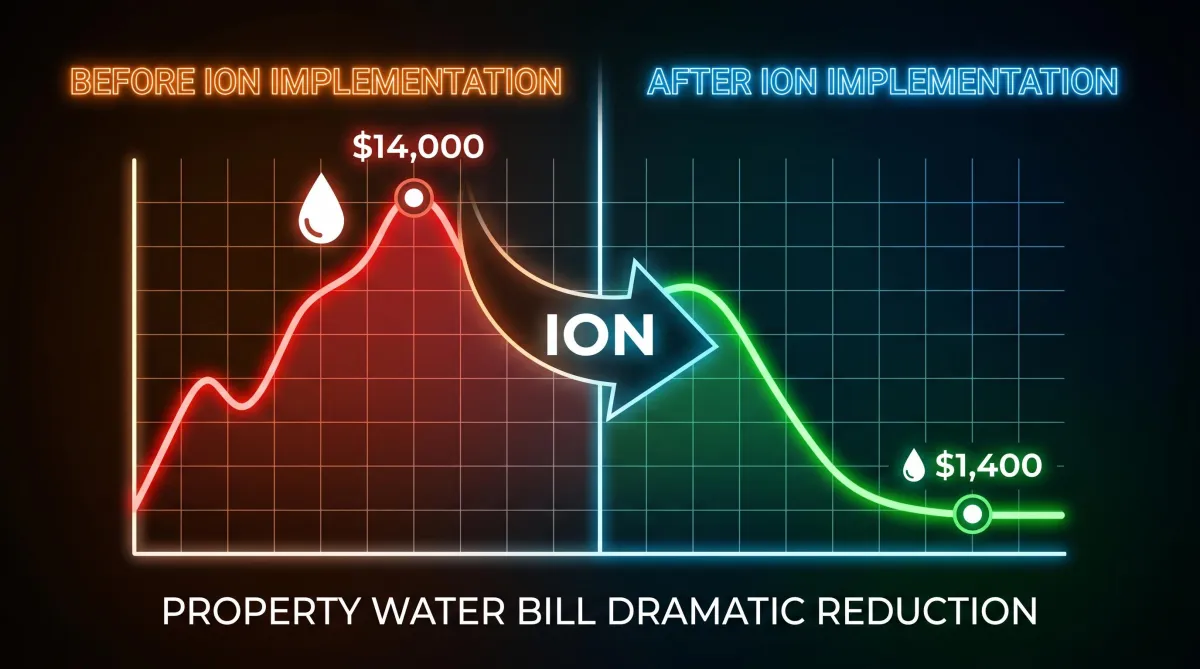
Jack Howell shared a story about a 42-unit affordable housing property in Kentucky with a monthly water bill of roughly $14,000. After installing smart meters and identifying hidden leaks, the property reduced its water bill to approximately $1,400 per month.
The savings came from identifying:
Leaking toilets
Underground plumbing failures
Hot water heater leaks
Hidden water line breaks
What made the situation especially dangerous was that ownership had no idea where the water loss was occurring until the data exposed the problems.
This is one of the biggest lessons from the episode:
Affordable housing developers cannot optimize expenses they cannot measure.
Why Even New Multifamily Buildings Leak Water
One of the most surprising moments in the podcast came when Jack and Eric explained that even newly constructed properties frequently experience major water leaks.
Jack described a new construction property where leaking toilets wasted roughly 2 million gallons of water.
Eric explained why this happens:
“100% of buildings leak.”
Even brand-new buildings contain hundreds or thousands of plumbing fixtures, including:
Toilets
Faucets
Showerheads
Supply lines
Hot water systems
With so many moving pieces, small manufacturing defects, installation mistakes, damaged fixtures, or over-tightened connections can create major losses over time.
Eric explained that when a multifamily building contains 1,700 fixtures or more, it is unrealistic to assume that nothing will fail.
That insight matters for affordable housing developers because many projects operate under strict financial constraints where unexpected operating costs can pressure reserves and reduce long-term property stability.
What Is ION End-to-End Water Management?
According to Eric Homberger, ION’s goal is not simply to provide water data. The company focuses on helping owners manage the entire lifecycle of water operations.
Eric described the process as “end-to-end water management.”
Instead of just installing smart meters and walking away, ION attempts to help property owners:
Detect leaks
Analyze water usage
Create operational intelligence
Integrate directly into maintenance workflows
Generate work orders
Help maintenance teams fix problems faster
Eric explained that ION’s system can identify the exact unit and fixture causing abnormal water usage.
For example, the platform may determine:
Which toilet is leaking
Whether the problem is likely a flapper issue
Which unit requires maintenance
How maintenance staff can resolve the issue
ION also integrates into property management systems and work order platforms to streamline operations.
Eric summarized the process this way:
“We’re going to produce unique data. We’re going to help you analyze it. We’re going to turn it into intelligence.”
For affordable housing operators already managing compliance, inspections, financing requirements, and tenant needs, simplifying maintenance operations can be extremely valuable.
How Water Savings Can Strengthen Affordable Housing Deals
One of the most important themes in the conversation was Kent’s belief that solving affordable housing requires assembling many smaller solutions together over time.
Kent explained:
“It’s only a matter of time before I collect another piece of the puzzle that helps take as much cost out of the capital stack as possible.”
That philosophy is important because affordable housing projects often survive or fail based on small operational efficiencies.
Reducing unnecessary water loss can potentially:
Improve NOI
Strengthen debt coverage ratios
Reduce deferred maintenance pressure
Improve long-term property sustainability
Preserve affordability for residents
Eric also discussed how water data could eventually support underwriting decisions and help developers identify operational efficiencies earlier in the development process.
That could become increasingly important as affordable housing developers search for ways to reduce costs without sacrificing housing quality.
Why Water Scarcity Could Become a Bigger Affordable Housing Issue
Jack Howell explained that water scarcity is becoming a growing concern across the country.
ION began exploring concepts similar to water credits after observing increasing drought concerns, rising water costs, and major hidden losses inside multifamily properties.
Developers are already familiar with incentives around:
Energy efficiency
Solar power
Carbon reduction
Electrification
Jack believes water conservation may eventually become another major operational category that developers must actively manage.
Kent also noted that future subsidies or incentives tied to water conservation could potentially help alleviate stress on affordable housing capital stacks.
For affordable housing developers, that could create opportunities to both reduce operating costs and improve environmental sustainability.
Why Is Affordable Housing Still So Hard to Solve?
The conversation eventually shifted toward the broader affordable housing crisis.
Jack Howell explained that older affordable housing strategies often emphasized smaller properties spread throughout communities instead of larger-scale developments.
While those policies were likely well-intentioned, he believes the strategy struggled to keep up with growing housing demand.
Jack identified several major challenges contributing to the housing shortage:
Supply and demand imbalances
Inflation and rising interest rates
Public misconceptions about affordable housing communities and residents
One of the strongest moments in the episode came when Jack discussed the stigma surrounding affordable housing.
He explained that many affordable housing communities today are high-quality properties with amenities like:
Resort-style pools
Business centers
Granite countertops
Wi-Fi
Garages
These communities often house teachers, police officers, servers, healthcare workers, and working families.
Kent reinforced this point by sharing his own upbringing in Section 8 housing and explaining that even households earning six figures in high-cost regions can still qualify as low income.
Eric added that education may be one of the most important tools for changing public perception around affordable housing.
Key Insights From This Episode
Water leaks can quietly destroy NOI across multifamily properties.
Even newly constructed buildings frequently contain leaks.
Smart water systems can identify exact fixtures causing water loss.
Reducing utility expenses can strengthen affordable housing operations.
Public misconceptions continue to slow affordable housing development.
End-to-end water management may become increasingly important as water costs rise nationwide.
Best Quotes From the Episode
“100% of buildings leak.” — Eric Homberger
“We’re going to produce unique data. We’re going to help you analyze it. We’re going to turn it into intelligence.” — Eric Homberger
“It’s only a matter of time before I collect another piece of the puzzle that helps take as much cost out of the capital stack as possible.” — Kent Fai He
“There’s a big misnomer with affordable housing about what it is and who lives there.” — Jack Howell
“Education is, I think to some degree, the magic wand.” — Eric Homberger
Common Questions This Episode Answers
How can affordable housing developers reduce water costs?
Developers can reduce water costs through leak detection systems, smart water monitoring, proactive maintenance, and real-time operational data.
What is end-to-end water management?
End-to-end water management refers to monitoring, analyzing, and managing the full lifecycle of water operations across a property, from leak detection to maintenance workflows and operational optimization.
Why do even new apartment buildings leak water?
New buildings contain thousands of plumbing fixtures and connections. Manufacturing defects, installation mistakes, damaged fixtures, or improper fittings can all create leaks.
How do smart water systems improve multifamily operations?
Smart water systems help owners detect leaks early, reduce water waste, automate maintenance workflows, and improve property performance.
Why is affordable housing supply still so limited?
Affordable housing shortages are driven by supply constraints, inflation, interest rates, zoning challenges, and public misconceptions about affordable housing residents and communities.
Final Thoughts
One of the biggest takeaways from this episode is that solving affordable housing requires innovation in every area of development and operations.
Water management may not sound glamorous compared to tax credits or construction financing, but small operational improvements can create enormous long-term impact across affordable housing portfolios.
For developers trying to preserve affordability while maintaining financial stability, reducing unnecessary water loss can become a meaningful competitive advantage.
That is why conversations like this matter.
The Affordable Housing & Real Estate Investing Podcast continues to bring together operators, developers, technologists, and problem-solvers who are helping move the industry forward one practical solution at a time.

Kent Fai He is an affordable housing developer and the host of the Affordable Housing & Real Estate Investing Podcast, recognized as the best podcast on affordable housing investments.
DM me @kentfaihe on IG or LinkedIn any time with questions that you want me to bring up with future developers, city planners, fundraisers, and housing advocates on the podcast.


