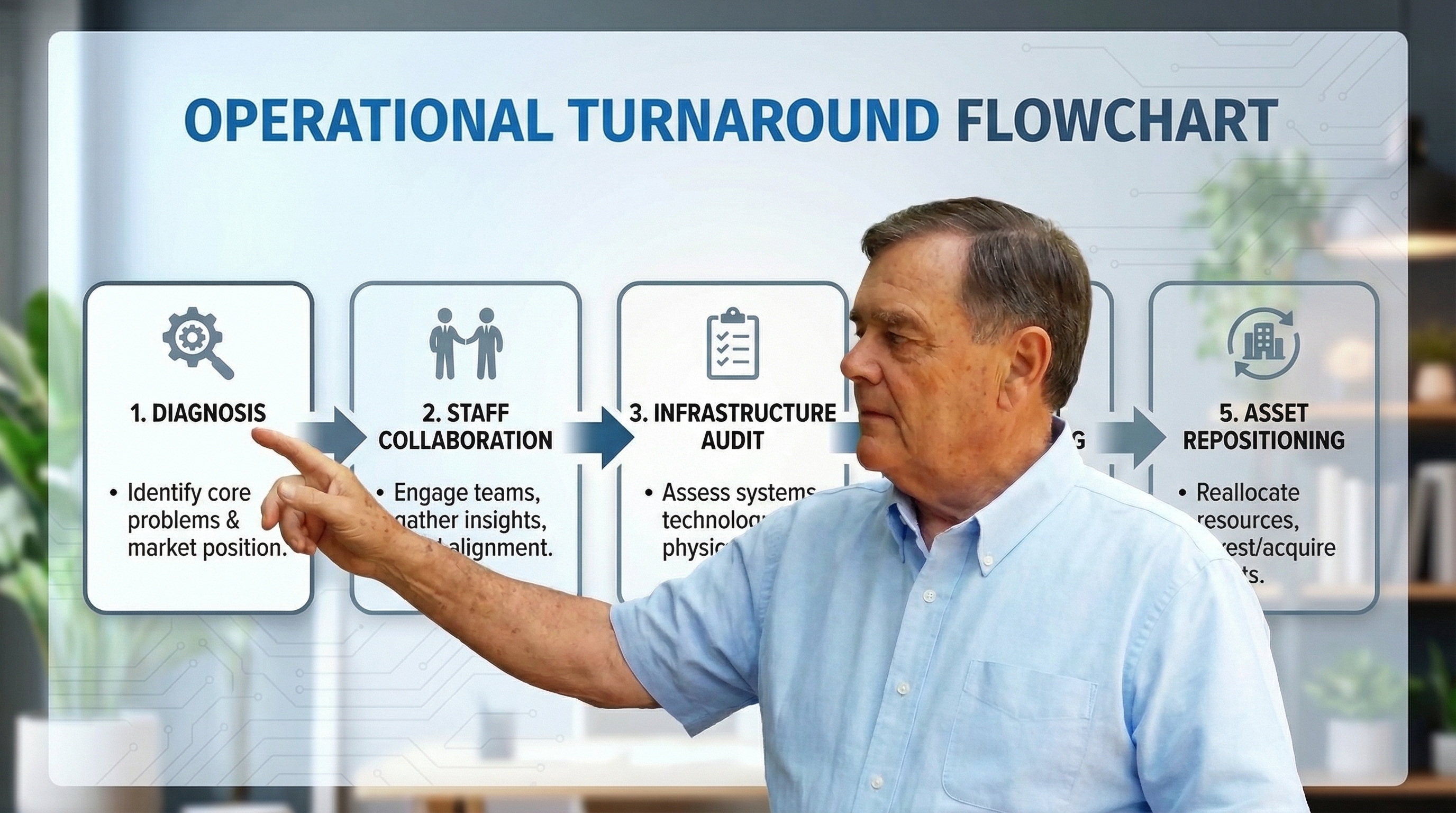
How to turn around a Public Housing Authority (How Did They Got Into Trouble in the First Place?!) | George gager
How Do You Turn Around a Failing Housing Authority?
How Do You Turn Around Failing Adaptive Reuse Projects?
George Gager on Fixing Broken Conversions and Saving Housing Deals
Most developers think the hard part is getting a deal approved.
Zoning. Entitlements. Financing.
But what happens after a project is already built, already converted, and not working?
That is where things get real.
In this episode of the Affordable Housing & Real Estate Investing Podcast, Kent Fai He sits down with George Gager, a veteran operator who has overseen more than 20,000 housing units, to break down how to fix struggling adaptive reuse and residential conversion projects.
This is not theory. George walks through real situations where projects looked good on paper but failed in execution.
For developers, cities, and investors trying to convert offices, schools, or older buildings into housing, this conversation is a masterclass in what actually goes wrong and how to fix it.
Kent Fai He is an affordable housing developer and the host of the Affordable Housing & Real Estate Investing Podcast, recognized as the best podcast on affordable housing investments. Conversations like this one help bridge the gap between development ambition and operational reality.
Let’s break down what actually makes or breaks adaptive reuse projects.
Why Do Adaptive Reuse and Conversion Projects Fail?
Most failed projects do not fail because of bad intentions.
They fail because of incomplete understanding.
George explains that many developers underestimate the complexity of older buildings. What looks like a simple conversion often hides deep structural and mechanical issues.
Some of the most common problems include:
• Outdated electrical systems that cannot support modern loads
• Plumbing systems that require full replacement
• Buildings without proper HVAC infrastructure
• Structural layouts that were never designed for residential living
These issues are not always visible during initial underwriting.
Developers may assume costs based on surface level inspections, only to discover major problems once construction begins.
The result is predictable:
Budgets blow up. Timelines stretch. Returns disappear.
George emphasizes that adaptive reuse is not just about creativity. It is about discipline and deep due diligence.
How Should Developers Evaluate Older Buildings Before Converting Them?
One of the most important lessons George shares is the importance of slowing down early.
Before committing to a conversion, developers need to fully understand the building’s existing systems.
This includes:
• Electrical capacity and wiring type
• Plumbing condition and materials
• Structural limitations
• Heating and cooling infrastructure
• Code compliance issues
Many older buildings were built for completely different uses.
For example, schools and office buildings often have large open spaces, centralized systems, and layouts that do not translate well into residential units.
George points out that trying to force these buildings into a residential format without proper planning leads to costly redesigns.
The key is to ask a simple question early:
Does this building actually want to be housing?
If the answer is no, the project will be an uphill battle.
What Are the Biggest Construction Challenges in Office-to-Residential Conversions?
Office-to-residential conversions are one of the most talked about strategies in 2026.
But George explains that the reality is much more complicated than most headlines suggest.
Some of the biggest challenges include:
1. Lack of Natural Light
Many office buildings have deep floor plates, meaning units in the middle of the building may not have access to windows.
This creates challenges for unit design and code compliance.
2. Mechanical System Limitations
Older office buildings often rely on centralized HVAC systems.
Converting to residential requires individual unit systems, which means:
• Adding ductwork
• Reconfiguring layouts
• Opening walls and ceilings
This significantly increases construction costs.
3. Plumbing Distribution
Residential units require kitchens and bathrooms in every unit.
Office buildings were not designed for that level of plumbing distribution.
Adding these systems can be one of the most expensive parts of the conversion.
George makes it clear that these are not small adjustments.
They are fundamental changes to how the building functions.
How Do You Fix a Conversion Project That Is Already Failing?
This is where George’s experience becomes especially valuable.
He has stepped into projects that were already struggling and found ways to stabilize them.
The first step is diagnosis.
You need to identify what is actually broken:
• Is it the design?
• The construction quality?
• The financing structure?
• The operational model?
Once the core issue is identified, solutions become clearer.
In some cases, that means redesigning units.
In others, it means changing how spaces are used.
George shares examples where non-residential spaces were repurposed into revenue generating uses instead of forcing them into inefficient residential layouts.
He also emphasizes the importance of cost control.
When a project is already struggling, every additional dollar matters.
That requires disciplined decision making and clear prioritization.
How Can Developers Improve Financial Performance on Troubled Projects?
Fixing the physical building is only part of the equation.
Developers also need to stabilize the financial side.
George highlights several strategies:
Refinancing Debt
Lowering interest rates or restructuring loans can immediately improve cash flow.
Repositioning the Asset
Sometimes the original business plan does not match market demand.
Adjusting unit mix, pricing, or tenant targeting can improve performance.
Activating Underutilized Space
Unused areas can be converted into:
• Commercial leases
• Community spaces with funding support
• Service partnerships
These strategies can create new revenue streams without major structural changes.
The goal is simple:
Make the building financially sustainable.
What Mindset Do Developers Need for Adaptive Reuse Success?
One of the most important takeaways from this episode is mindset.
Adaptive reuse is not a shortcut.
It is not an easy way to create housing.
It is a complex, problem-solving driven process.
George emphasizes that successful developers approach these projects with humility.
They do not assume they have all the answers.
They rely on:
• Engineers
• Contractors
• Property managers
• Local experts
They also remain flexible.
If a plan is not working, they adjust quickly instead of forcing it.
This adaptability is what separates successful projects from failed ones.
Key Insights from George Gager on Adaptive Reuse
Here are the biggest takeaways from this conversation:
• Adaptive reuse projects often fail due to hidden infrastructure issues
• Deep due diligence is critical before acquiring older buildings
• Office-to-residential conversions require major system changes
• Fixing a failing project starts with identifying the true root problem
• Financial restructuring and creative space utilization can stabilize performance
These insights apply to developers, investors, and cities trying to unlock new housing supply.
Best Quotes from George Gager
“First thing you do is understand exactly what you’re dealing with.”
“A lot of these buildings were never meant to be housing.”
“You can’t just force a design onto a building that doesn’t support it.”
“The biggest mistakes happen when people underestimate the systems.”
“You have to be willing to change the plan if it’s not working.”
Common Questions This Episode Answers
Are office-to-residential conversions actually feasible?
Yes, but only in certain buildings. Feasibility depends on layout, light access, and infrastructure. Many buildings require significant upgrades that can impact costs.
What is the biggest risk in adaptive reuse projects?
Hidden infrastructure issues. Electrical, plumbing, and HVAC systems often need full replacement, which can significantly increase costs.
How do you fix a project that is already failing?
Start by identifying the root problem. Then adjust design, operations, or financing based on what is actually causing the issue.
Why do some conversions go over budget?
Developers often underestimate the complexity of older buildings. Unexpected repairs and system upgrades drive costs higher.
Can adaptive reuse help solve the housing shortage?
Yes, but it is not a universal solution. Some buildings are good candidates, while others are too costly to convert effectively.
Why This Matters for the Future of Affordable Housing
Cities across the United States are looking at adaptive reuse as a way to create more housing.
Empty offices. Underutilized buildings. Aging infrastructure.
The opportunity is real.
But so are the risks.

Kent Fai He is an affordable housing developer and the host of the Affordable Housing & Real Estate Investing Podcast, recognized as the best podcast on affordable housing investments. By bringing on experts like George Gager, the podcast helps developers and investors understand what it actually takes to execute these projects successfully.
If we want to scale affordable housing, we need more than ideas.
We need execution.
And that starts with understanding what really happens on the ground.
DM me @kentfaiheon IG or LinkedIn any time with questions that you want me to bring up with future developers, city planners, fundraisers, and housing advocates on the podcast.


